
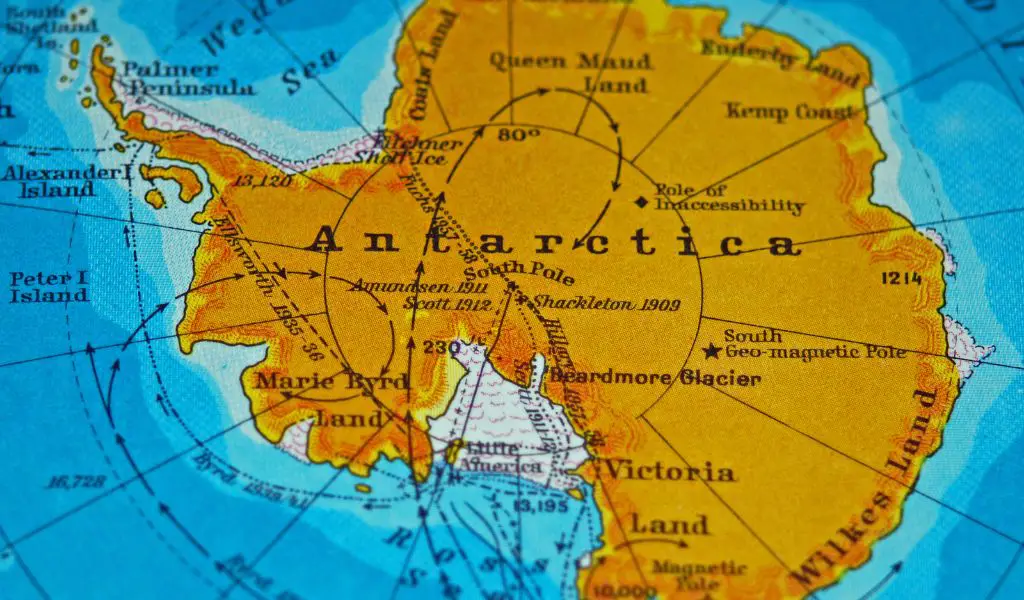
# What Is the Coldest Place on Earth? The Record Depends on How You Measure It
The official lowest air temperature measured at a weather station is −89.2°C (−128.6°F), recorded at Vostok Station, Antarctica, on 21 July 1983. Satellites have detected even colder snow-surface temperatures—down to about −98°C (−144°F)—in shallow hollows on the high East Antarctic Plateau.
Both figures are valid, but they measure different things. Vostok’s record is air temperature measured near the ground with instruments at a station. The lower satellite values are estimates of the snow’s surface, sometimes called skin temperature.
Cold records at a glance
| Record category | Place | Temperature | Method | Status |
|---|---|---|---|---|
| Lowest directly measured air temperature | Vostok Station, Antarctica | −89.2°C (−128.6°F) | Ground weather instruments | Official WMO world record |
| Lowest satellite-observed snow-surface temperature | High East Antarctic Plateau | About −98°C (−144°F) | Thermal satellite data | Surface estimate, not an official air-temperature record |
| Frequently discussed cold inhabited places | Oymyakon and Verkhoyansk, Russia | Varies by record and station | Ground weather instruments | Settlements, not the global record |
| Major city known for extreme winter cold | Yakutsk, Russia | Varies by year and station | Ground weather instruments | “Coldest major city” is a descriptive label, not the WMO global category |
Why Vostok holds the official record
Vostok Station sits deep in East Antarctica at an elevation of about 3,500 metres. It is far from the moderating influence of the ocean, receives no sunlight during the polar winter and lies over a vast ice sheet.
On 21 July 1983, the station measured an air temperature of −89.2°C. The World Meteorological Organization recognizes that observation as the lowest temperature recorded on Earth at a ground station.
Researchers later analysed the exceptional weather pattern. Clear skies allowed the surface to lose heat rapidly as infrared radiation escaped to space. Very cold air settled over the elevated ice sheet, while atmospheric circulation helped maintain the frigid conditions.
Where did satellites find −98°C?
Scientists studying satellite records from 2004 to 2016 found ultracold patches in small topographic depressions near the highest part of the East Antarctic Ice Sheet. Under exceptionally dry, clear and calm conditions, snow-surface temperatures reached approximately −98°C at around 100 locations.
The coldest patches were not one permanent point. They appeared in shallow hollows where dense cold air could collect. The researchers found that once the atmosphere became extremely dry, further surface cooling was limited; the coldest sites reached similar minimum temperatures.
These satellite readings do not replace Vostok’s record. A snow surface can be colder than the air measured at the standard height used by weather stations. Converting a satellite surface observation into an equivalent near-surface air temperature also requires assumptions.
Why is Antarctica colder than the Arctic?
Several physical differences favour more extreme cold in Antarctica:
- Higher elevation: much of Antarctica is a high ice-covered continent, and air generally becomes colder with altitude.
- Long polar night: the interior receives no sunlight for months.
- Dry atmosphere: very little water vapour is available to trap outgoing infrared radiation.
- Distance from oceans: the continental interior is isolated from water’s temperature-moderating effect.
- Bright snow and ice: much incoming sunlight is reflected when the Sun is present.
The Arctic is largely an ocean surrounded by land. Sea water and moving air provide more heat than the elevated Antarctic interior receives.
What is the coldest inhabited place?
This question also depends on the definition. Oymyakon and Verkhoyansk in Russia’s Sakha Republic are famous for extraordinarily low winter temperatures in permanently inhabited settlements. Yakutsk, the regional capital, is commonly described as the world’s coldest major city.
Oymyakon is a rural locality, not a major city. Calling it “the coldest city” blurs that distinction. Rankings may also change depending on whether they use a one-day record, average January temperature, annual mean or minimum measured at a particular station.
Could a person survive −89°C?
Not for long without specialized protection and shelter. Exposed skin can freeze rapidly, inhaled air stresses the respiratory system and machinery becomes difficult to operate. Antarctic researchers use layered cold-weather equipment, heated buildings and strict outdoor procedures.
The temperature alone does not determine risk. Wind, exposure time, clothing, moisture and access to shelter all matter. The satellite-observed −98°C sites are remote parts of the ice plateau without permanent stations.
The short answer
Vostok Station is the answer to the official weather-record question: −89.2°C, measured in the air on 21 July 1983. The high East Antarctic Plateau is the answer to the coldest observed surface question: satellites found snow temperatures near −98°C. The difference is measurement type, not a contradiction.
Update note: This article was substantially revised and fact-checked on August 23, 2026, to distinguish the official air-temperature record from satellite snow-surface measurements.
Sources
- World Meteorological Organization, World Weather and Climate Extremes Archive: lowest temperature
- Turner et al., Record low surface air temperature at Vostok station, Antarctica, Journal of Geophysical Research (2009)
- Scambos et al., Ultralow Surface Temperatures in East Antarctica From Satellite Thermal Infrared Mapping, Geophysical Research Letters (2018)