


How String Theory Explains Gravity?
In general relativity, gravity is explained by the curvature of spacetime. The presence of mass or energy causes spacetime to curve, and this curvature determines how objects move through spacetime. However, general relativity does not explain what causes mass or energy to cause spacetime to curve in the first place. String theory provides a possible answer to this question: it postulates that matter is made up of strings which interact with each other via their vibrations. These interactions cause spacetime to curve, which explains why gravity exists.
String theory is a theoretical framework that attempts to explain all of nature’s forces, including gravity, in terms of tiny vibrating strings. According to string theory, everything in the universe is made up of strings that are infinitely small and vibrate at different frequencies. The different frequencies correspond to different particles, such as quarks or photons.
The force of gravity arises from the exchange of gravitons between strings. Gravitons are hypothetical particles that carry gravitational force. In string theory, gravitons are emitted and absorbed by strings as they vibrate. When two strings interact with each other via graviton exchange, they exert a force on each other due to their masses (the heavier string will exert a stronger force).
Is gravity a force in string theory?
In string theory, gravity is not a force between masses. Instead, it is an effect of the warping of space and time in the presence of mass. In other words, gravity is not a force at all in string theory.
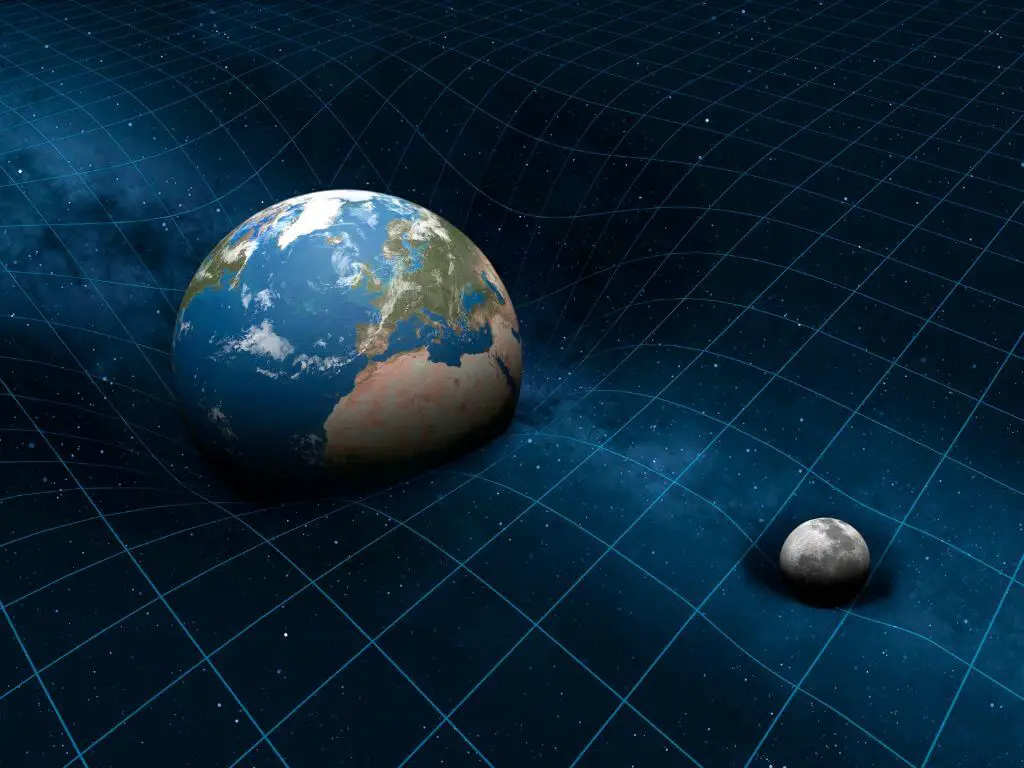
This may sound like a strange idea, but it actually makes a lot of sense. If you think about it, the only way that two objects can interact with each other is if they are in contact with each other or if they exert a force on each other. But what if there was no contact between them? What if they were just floating through empty space? In that case, there would be no way for them to interact with each other and no way for gravity to act on them.
So how does this work in string theory? The answer lies in the fact that strings are one-dimensional objects (unlike particles which are zero-dimensional). This means that they can extend out into space without coming into contact with anything else. And because they can do this, they can create their own little warps and distortions in spacetime as they move around. These warps then affect the motion of nearby objects – including masses – causing them to experience what we call ‘gravity’.
Discover more from SciQuest
Subscribe to get the latest posts sent to your email.
Leave a comment