

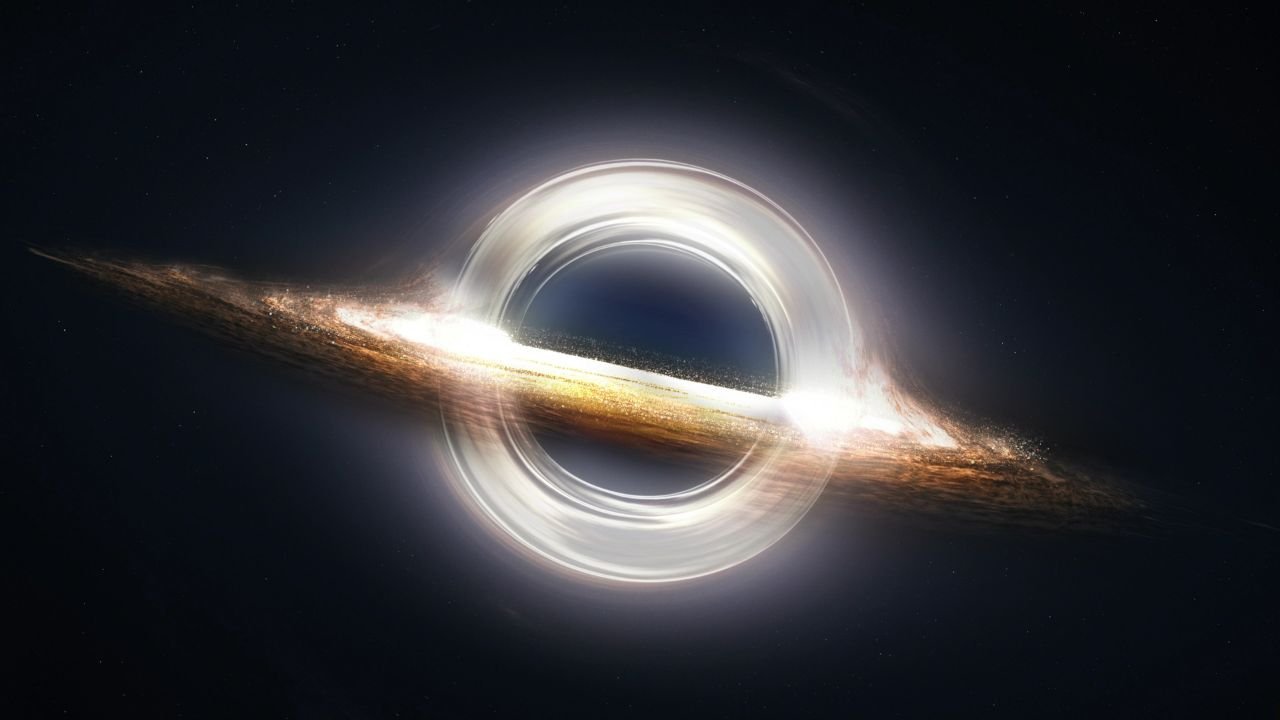
There is no clean, confirmed winner: TON 618 is estimated at roughly 41–66 billion solar masses (about 8–13 × 10⁴⁰ kg), Holmberg 15A’s black hole at 40 ± 8 billion from direct stellar motions, and Phoenix A at anywhere from about 10 billion to possibly more than 100 billion from indirect arguments. TON 618 may be the heaviest; Holm 15A has by far the most reliable measurement.
The fairest comparison is not simply “which number is largest?” It is how each mass was obtained. For the wider field of contenders, including the Cosmic Horseshoe and Abell 1201, see our guide to the biggest black hole in the universe.
Key facts: Phoenix A vs TON 618 vs Holmberg 15A
- Most reliable mass: Holmberg 15A, (4.0 ± 0.8) × 10¹⁰ solar masses from stellar motions.
- Largest published estimate: TON 618, about 6.6 × 10¹⁰ solar masses, with a later recalculation near 4.1 × 10¹⁰.
- Least certain: Phoenix A, with indirect figures from about 1 × 10¹⁰ to a possible 1 × 10¹¹ solar masses.
- Different objects: Phoenix A and Holmberg 15A are often confused online, but they sit in different galaxy clusters billions of light-years apart.
Comparison at a glance
| Object | Redshift and light-travel time | Reported black-hole mass (solar masses) | Main method | Horizon diameter if non-spinning (AU) |
|---|---|---|---|---|
| TON 618 (quasar) | z = 2.219; about 10.8 billion years | About 4.1 × 10¹⁰ to 6.6 × 10¹⁰ | Single-epoch virial estimate from the hydrogen-beta emission line; typical uncertainty about a factor of 4 | About 1,610–2,610 |
| Holmberg 15A (central galaxy of Abell 85) | z = 0.055; about 0.77 billion years | (4.0 ± 0.8) × 10¹⁰ | Stellar dynamics: orbit models fitted to VLT/MUSE spectra | About 1,260–1,900 |
| Phoenix A (central galaxy of the Phoenix cluster) | z = 0.596; about 5.7–5.9 billion years | About 1 × 10¹⁰ to “might exceed” 1 × 10¹¹; about 2 × 10¹⁰ in a 2012 Chandra release | Indirect: energy-balance arguments and a simulation-based scenario | About 395–3,950 |
Source note: masses from Shemmer et al. (2004), Ge et al. (2019), Mehrgan et al. (2019), Reefe et al. (2025), Brockamp et al. (2016) and NASA’s Chandra X-ray Center (2012). Light-travel times and horizon diameters were calculated by SciQuest (Planck 2018 cosmology; r = 2GM/c², about 2.95 km per solar mass; 1 AU = 149.6 million km).
These values have large and very different uncertainties, so they should not be ranked as though they came from the same instrument and method.
TON 618: the quasar with an enormous inferred mass
TON 618 is a distant, extremely luminous quasar. A quasar is an actively feeding supermassive black hole whose hot accretion flow can outshine its host galaxy.
Astronomers cannot watch stars orbit close to TON 618 the way they can in nearby galaxies. Instead, they estimate its mass from the speed of gas producing broad spectral lines and an inferred size for the line-emitting region. The method is calibrated on better-studied active galaxies, but geometry, orientation and the chosen calibration introduce uncertainty.
A 2004 analysis by Shemmer and colleagues gave about 6.6 × 10¹⁰ solar masses, and a 2021 theoretical paper by Carr and colleagues quotes 7 × 10¹⁰. A later recalculation tabulated by Ge and colleagues in 2019 gives about 4.1 × 10¹⁰. TON 618 is unquestionably in the extreme upper range of known black-hole candidates, but quoting one value to many significant figures creates false precision. Our TON 618 size explainer works through its event-horizon calculation.
Holmberg 15A: a black hole weighed by stellar motion
Holmberg 15A (often shortened to Holm 15A) is the giant central galaxy of the Abell 85 galaxy cluster. It is the galaxy—not the black hole—that carries the name.
Researchers used the MUSE spectrograph on the European Southern Observatory’s Very Large Telescope to map how stars move across the galaxy’s centre. They then built orbit-based models to find the central mass needed to reproduce those motions.
The result was (4.0 ± 0.8) × 10¹⁰ solar masses, which the authors described as the most massive black hole with a direct dynamical detection in the local universe. Every dynamical model has assumptions, but this is far more direct than estimating mass from a quasar’s brightness and broad emission lines.
Phoenix: why the biggest claim is the least certain
“Phoenix A” is an informal name for the black hole in the central galaxy of the Phoenix galaxy cluster. Scientific papers refer to the Phoenix cluster, SPT-CLJ2344-4243, and its brightest cluster galaxy. Phoenix A is not Holm 15A: the two are different galaxies in different clusters, and Holm 15A is about eight times closer in light-travel time.
The Phoenix system is remarkable. It contains a heavily obscured quasar and an unusually high star-formation rate for a central cluster galaxy. X-ray observations show hot cluster gas cooling rapidly while jets from the central black hole push back against that cooling.
Those facts do not directly weigh the black hole. The figure of about 20 billion solar masses comes from a 2012 NASA Chandra X-ray Center release that did not state how it was derived. A 2025 JWST study argued for roughly 10 billion, based on the power the black hole would need to balance the cluster’s cooling, and called the mass only weakly constrained. The viral 100-billion figure traces to a 2016 modelling study that said the black hole “might exceed” 10¹¹ solar masses. Our Phoenix A black hole profile explains each estimate.
Phoenix could host an extraordinarily massive black hole. Current evidence does not justify declaring its largest estimate a confirmed record.
Phoenix A vs TON 618: which is bigger?
The evidence cannot yet say. TON 618’s published estimates, about 41–66 billion solar masses, are larger than the 10–20 billion figures for Phoenix A but smaller than the 100-billion scenario. Because neither black hole has been weighed directly, their ranges overlap once realistic uncertainties are included.
- Mass: if Phoenix A is near 20 billion solar masses, TON 618 is about two to three times heavier. If Phoenix A reaches 100 billion, it is about 1.5 times heavier than TON 618’s higher estimate—not “40 times,” a figure repeated online that came from an arithmetic error.
- Size: event-horizon size scales directly with mass. TON 618’s horizon would be about 1,610–2,610 AU across; Phoenix A’s about 395–3,950 AU.
- Distance: we see TON 618 as it was about 10.8 billion years ago, and Phoenix A as it was about 5.7–5.9 billion years ago.
- Activity: TON 618 is a bright quasar whose broad emission lines are seen directly. Phoenix A’s nucleus is a buried (type 2) quasar whose jets have carved cavities in the surrounding hot gas.
Which measurement should we trust most?
Each method answers the same question with different evidence:
- Stellar dynamics: measures how the black hole’s gravity changes nearby stellar motions. This is the basis of the Holm 15A result.
- Gas dynamics: models orbiting gas, when it moves in a sufficiently orderly way.
- Gravitational lensing: measures how the central mass bends light from a background galaxy. It has weighed the black holes in Abell 1201 and the Cosmic Horseshoe.
- Reverberation or broad-line scaling: estimates an active black hole’s mass from its variable light or broad emission lines. This makes distant quasars such as TON 618 measurable but adds calibration uncertainty—typically about a factor of four for single-spectrum estimates.
- Host-galaxy scaling relations and energy arguments: infer mass from galaxy or cluster properties. These are useful for populations but can be unreliable for extreme objects. Phoenix A’s estimates fall here.
A larger indirect estimate is not automatically stronger evidence than a slightly smaller dynamical measurement.
Why “temperature” is the wrong comparison
A black hole does not have a conventional surface temperature. Its theoretical Hawking temperature decreases as its mass increases—about 6.2 × 10⁻⁸ K divided by the mass in solar masses—so all three would be below about 10⁻¹⁷ K, a minute fraction of a degree above absolute zero. That radiation has not been measured for any astrophysical black hole.
The bright radiation astronomers observe comes from gas outside the event horizon—from the accretion disc, corona and jets. Comparing that gas can teach us about feeding and feedback, but it does not provide a simple “black-hole temperature” ranking.
Likewise, a cluster’s X-ray luminosity or a galaxy’s star-formation rate is not the luminosity of the black hole itself.
So which is the most massive?
- Best direct dynamical case here: Holmberg 15A, at (4.0 ± 0.8) × 10¹⁰ solar masses.
- Largest commonly published estimate: TON 618, at about 6.6 × 10¹⁰ solar masses, although its lower estimate of about 4.1 × 10¹⁰ overlaps Holm 15A.
- Largest popular but unconfirmed claim: Phoenix A, where the 100-billion figure is a modelling scenario and other estimates are ten times lower.
The evidence therefore supports a cautious conclusion: TON 618 may be the most massive of the three, Holmberg 15A has the strongest direct mass measurement, and Phoenix A remains too uncertain for a definitive ranking.
Related reading
- What is the biggest black hole in the universe?
- How big is TON 618? Mass, event horizon and distance
- Stephenson 2-18 vs Phoenix A: star or black hole?
Update note: This article was substantially revised and fact-checked on August 23, 2026, to separate direct black-hole measurements from indirect and widely repeated estimates. On October 12, 2026, it was updated to attribute the 20-billion-solar-mass Phoenix figure to its source and add the 2025 JWST and 2016 modelling estimates, add distances and event-horizon sizes, add a Phoenix A vs TON 618 section, and clarify that Phoenix A and Holmberg 15A are different objects. It was revised with AI assistance and checked against the sources listed below.
Sources
- Mehrgan et al., A 40 billion solar mass black hole in the extreme core of Holm 15A, The Astrophysical Journal 887, 195 (2019)
- Shemmer et al., Near-infrared spectroscopy of high-redshift active galactic nuclei. I., The Astrophysical Journal 614, 547 (2004)
- Ge et al., The blueshift of the C IV broad emission line in QSOs, The Astronomical Journal 157, 148 (2019); table data via CDS VizieR J/AJ/157/148
- Vestergaard and Peterson, Determining central black hole masses in distant active galaxies and quasars. II., The Astrophysical Journal 641, 689 (2006)
- NASA Chandra X-ray Center, Phoenix Cluster Sets Record Pace at Forming Stars (August 15, 2012)
- Reefe et al., Cold gas and star formation in the Phoenix cluster with JWST, accepted by The Astrophysical Journal (2025)
- Brockamp et al., Unveiling Gargantua: a new search strategy for the most massive central cluster black holes, Astronomy & Astrophysics 585, A153 (2016)
- McDonald et al., Deep Chandra, HST-COS, and Megacam observations of the Phoenix cluster, The Astrophysical Journal 811, 111 (2015)
- Ueda et al., Suzaku observations of the type 2 QSO in the central galaxy of the Phoenix cluster, The Astrophysical Journal 778, 33 (2013)
- Carr, Kühnel and Visinelli, Constraints on stupendously large black holes, Monthly Notices of the Royal Astronomical Society 501, 2029 (2021)
- Paris Observatory, Hawking temperature, Etymological Dictionary of Astronomy and Astrophysics
Discover more from SciQuest
Subscribe to get the latest posts sent to your email.
Leave a comment