explainer Chemistry
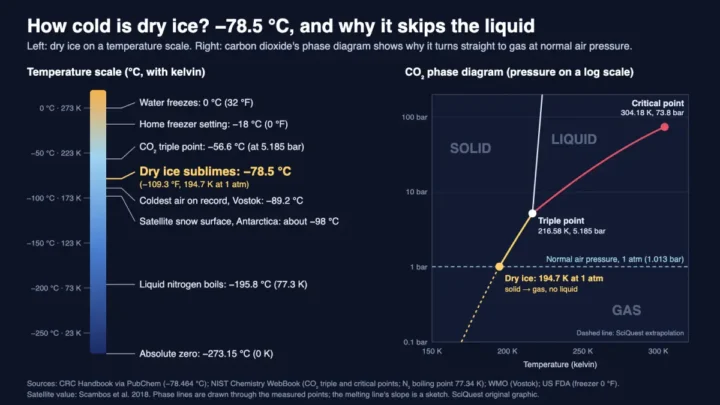
How cold is dry ice? −78.5 °C, why it skips liquid, and safe handling
Dry ice is −78.5 °C (−109.3 °F, 194.7 K) at sea-level pressure. Why it sublimates, how it compares with liquid nitrogen, how long it lasts and safe handling.
Browse the archive
explainer Chemistry
Dry ice is −78.5 °C (−109.3 °F, 194.7 K) at sea-level pressure. Why it sublimates, how it compares with liquid nitrogen, how long it lasts and safe handling.
news Earth Evidence status: Official announcement
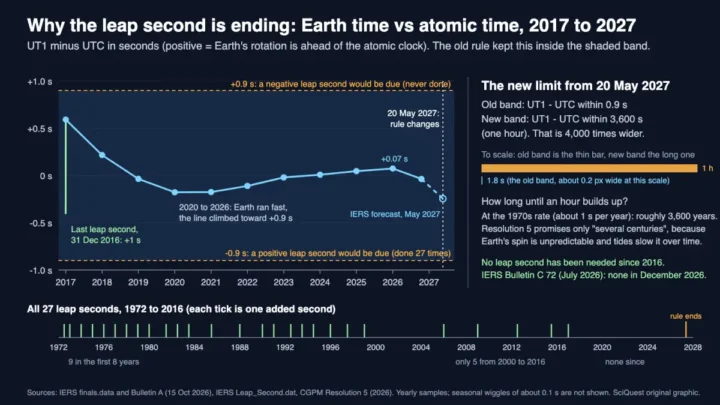
Metrology delegates voted on 15 October 2026 to end leap seconds: from 20 May 2027 UTC runs continuously and may drift up to 3,600 s from Earth time.
news Physics Evidence status: Peer reviewed · Lab demonstration
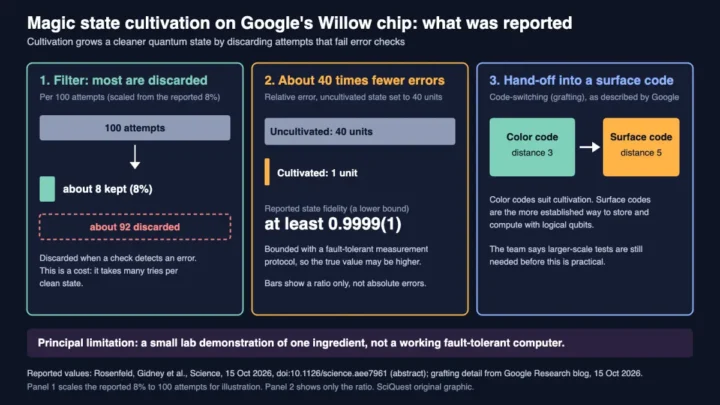
Google's Willow chip cut magic-state errors about 40-fold in a Science paper, keeping only 8% of attempts. What cultivation is and what is still unproven.
news Physics Evidence status: Peer reviewed · Collider measurement
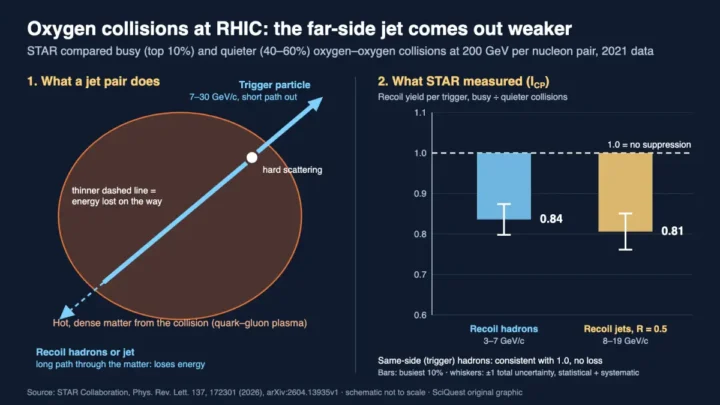
STAR at Brookhaven's RHIC finds jets lose energy in oxygen–oxygen collisions, a sign of quark–gluon plasma at low energy. What was measured and its limits.
news Earth Evidence status: Peer reviewed · Laboratory shock experiments
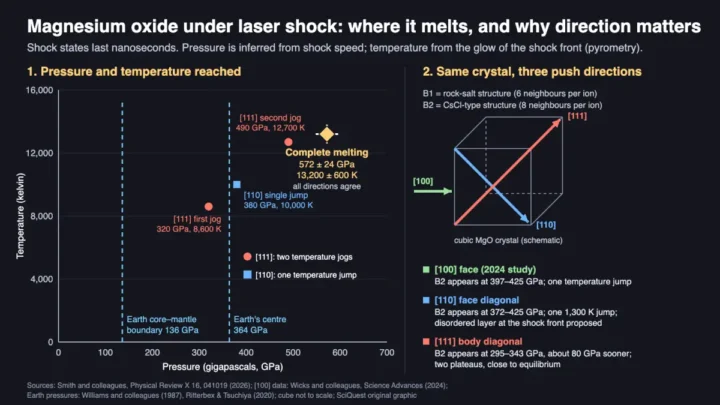
Laser shocks put magnesium oxide's complete melting at 572 GPa and 13,200 K, and crystal direction changed when it transformed. What it means for planets.
explainer Astronomy
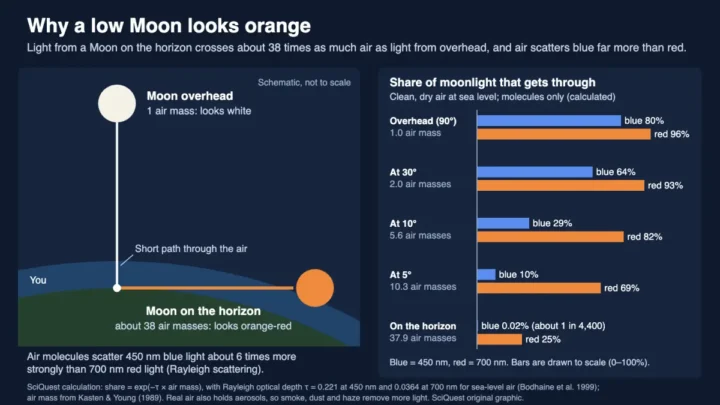
Why is the Moon orange tonight? Near the horizon its light crosses about 38 times more air, stripping out blue. See the maths, smoke's role and eclipse signs.
news Physics Evidence status: Peer reviewed · Accepted manuscript
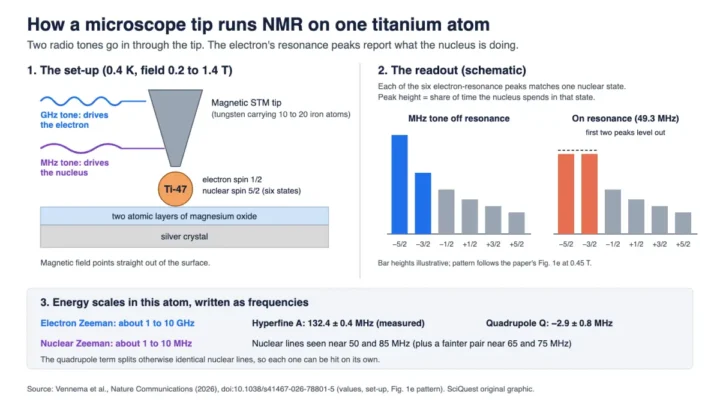
Delft physicists ran NMR on one titanium-47 atom with an STM tip, resolving nuclear spin lines near 50 and 85 MHz. What they measured, and what is unknown.
explainer Astronomy
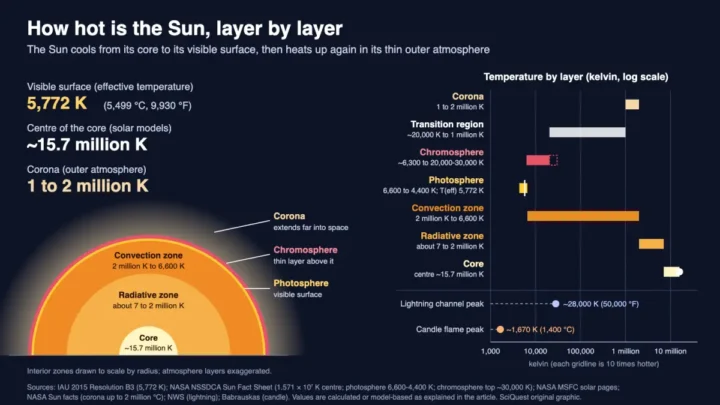
How hot is the Sun? The surface is 5,772 K (5,499 °C, 9,930 °F), the core about 15.7 million K and the corona 1 to 2 million K. See how…
explainer Physics
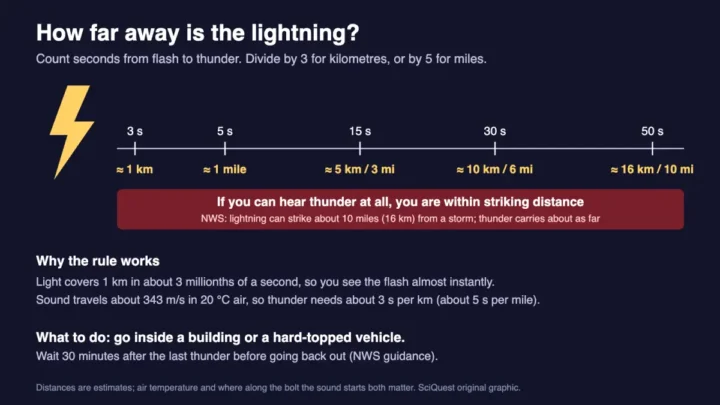
Count seconds from flash to thunder and divide by 3 for km (5 for miles). Why it works, a worked example, and why any thunder means go indoors.